Thursday, August 29, 2024

Traveling to the mountains where the water runs white

I'm back home from my short trip to east Tennessee and western North Carolina.  Last weekend I attended the centennial celebration at the camp I went to as a kid.  It was the first time I'd been by there in some five or six years, and it was fun to be back for a short while.  I enjoyed seeing old friends and acquaintances, and just as important is that none of the people I didn't like (i.e., bullies) showed up.

For the first time in nearly 40 years, I shot targets at both the archery range and the rifle range--those were among my favorite activities way back when.  My targets weren't very good: it was a reminder of how truly athletic these pursuits are.  While different from, say, gymnastics or basketball, shooting sports require a similar degree of calm control.

I also spent some time on the lake paddling my whitewater boat, doing the same kind of drills I'd been doing in the harbor here at home.  Then, once the festivities concluded Sunday morning, it was time to go run a whitewater river.  A couple of hours west of the camp property is the Nantahala River, a clear dam-controlled stream that played a big role in my paddling education in the 1980s.  It was an advanced run for campers because of its cold water that flowed more swiftly than the entry-level streams we ran, and back then I couldn't imagine a more formidable gauntlet of whitewater rapids.  Of course there are many rivers that are much more difficult than the Class II-III Nantahala, and in due course I moved on to some of them.  Now, for me, the Nantahala is just a pleasant, relaxing place to work on some skills.  And that's what I did Sunday afternoon.

One not-so-pleasant part of Sunday was navigating the chaos around the Nantahala Outdoor Center.  When I took my first canoe trips to the Nantahala in the early 1980s, the N.O.C. was still in its salad days. Pretty much everybody who worked there, from the raft guides and canoe & kayak instructors to the person ringing the cash register in the store, was a paddler.  A number of the employees were slalom racers earning some money while they pursued their dreams of making the U.S. whitewater team.  The store carried a little bit of non-paddling-related stuff; the Appalachian Trail passes right through the area, so it always made sense to have some hiking and camping gear, for instance.  But the main focus of the place was excellence in paddling, and those early visits to the N.O.C. were a big part of my catching the paddling bug.  Sadly, the place now more closely resembles the maw of a tourist vortex, especially on summer weekend days.  The traffic congestion is horrendous at times and finding a place to park is no small feat.  The crowds of people milling about the N.O.C. campus are much more interested in buying a tee shirt in the store or having a drink at the outdoor bar than giving the slightest thought to running a whitewater rapid skillfully and gracefully.  The company now offers many activities that have nothing to do with paddling.  I think they host a lot of corporate-team-building events with their ropes courses and zip lines and stuff.  Once upon a time the cashier in the store would have been a seasoned river rat or even a world-ranked racer, but nowadays that person is more likely to be just some college kid working a summer job, and if you ask about his or her paddling experience, you'll probably get an answer like "Well, I haven't been kayaking yet, but I'm hoping I'll get to go before the end of the summer."

Look, I get it that it's a business, and it has to evolve and grow and compete for a slice of that ever-fickle consumer market.  I'm just looking back wistfully on simpler times, that's all.  The N.O.C. property is the takeout for paddlers on the Nantahala, and by the end of the day, after I'd sat in the traffic on the two-lane highway and searched for a place to park my car and weaved through the throngs of tourists and all, I was more than ready to move on.

Move on I did.  I continued west, back into Tennessee, and made camp at a Forest Service campground on the bank of the Ocoee River.  I got up Monday morning and put my boat on the Ocoee for the first time in maybe a decade.  The Ocoee is a step up from the Nantahala: more of a Class III-IV run.  It's kind of the summertime staple for whitewater paddlers in the Southeast because of its reliable dam-released flows.  And it was here on Monday that I realized just how rusty my whitewater skills are.  If you're familiar with the Ocoee, then you know all the fun little moves you can do: the elevator move above Broken Nose; the ferry-into-an-ender move at Slice & Dice; flat spins at Moon Chute; the various eddies at Tablesaw.  Once upon a time I had those moves dialed, but on Monday I couldn't do any of that stuff.  Whitewater play is pretty much a matter of leaning the right way and taking the right stroke at the right instant, and right now my timing and my confidence in my balance are gone.  So I had some frustrating moments while running the Ocoee.

What else should I have expected?  To be good on whitewater you have to do whitewater, and I'd barely paddled whitewater at all in the last eight years.  Even if I were twenty years younger I couldn't reasonably expect to pick right up where I'd left off after so much time away.  Here in late middle age I might have to lower my expectations to simply being competent on the river.  And that's the problem: I don't want to be just competent.  I wanna be stylin' it out there!

In about a week I'm planning to join a friend on the Gauley River up in West Virginia, and the Gauley is quite a bit more challenging than the Ocoee.  At the very least I need to get down it in one piece, and I'm not too worried about that, seeing as how I've watched a lot of people far less skilled than I presently am run that river.  I just hope I can re-adjust to a serious whitewater environment and recover at least a little bit of my old mojo.  That's the minimum of what I hope to accomplish as I work to get ready for two weeks in the Grand Canyon a year from now.

When I finished my Ocoee run I loaded up the car and headed back home.  The weather had been delightful over there in the southern Appalachians: sunny, a high temperature not much above 80 degrees Fahrenheit, overnight lows in the 50s.  I was sorry to leave that behind.  By the time I was in middle Tennessee the dashboard temperature display in my car had risen into three digits.  The temperature here in Memphis has been around 100 degrees for the last couple of days.  I've spent that time just recovering.  I've been sore in my shoulders, lats, traps, lower back, quads... all over.  All those flatwater drills I'd done in my whitewater boat were fairly intense, but there's just no way to prepare for all the stresses of whitewater without paddling some whitewater.

I woke up this morning feeling not so sore anymore, but still tired and sluggish.  I got myself down to the river to see what I could do.  I paddled the surfski to the mouth of the harbor hoping to find some wake-surfing opportunities out on the Mississippi, but there was no barge traffic in sight.  So I headed back to the dock.  Another sizzling hot day was taking shape, and while a south breeze kept me cool when I headed south, coming back north toward the dock I was as hot as could be.  I practiced a couple of remounts by way of cooling off.

Back at the dock I hopped in the whitewater boat.  I'd just received a brand-new sprayskirt I'd ordered from the River Elf company of Florence, Alabama, and I set about the process of breaking it in before my Gauley trip.  My old skirt had been leaking like a sieve, and I could tell already how much drier my boat was as I did a number of rolls.  One of the things my recent river runs reminded me of is how rarefied a flatwater environment is: making the boat glide and spin is so much easier when you don't have all the various opposing currents that rivers like the Nantahala and Ocoee and Gauley have.

Getting good and wet in the whitewater boat, and then taking a hose bath on the dock, felt good on a very hot summer day.  I hope for cooler weather in West Virginia next week.


For more information on what this blog is about, click here.

Thursday, August 22, 2024

Leaving town a bit later than planned

My travel plans have changed.  My uncle died sometime Monday night or Tuesday morning, and the funeral is tomorrow afternoon up near Jackson, Tennessee.  So now my plan is to attend the funeral and then drive the seven hours or so from there to camp.

I'll miss supper and the Friday evening festivities at camp, but at least I'll be there for the heart of the weekend.  The main thing I'm giving up is a couple of days of whitewater paddling, and I'm disappointed about that, but there will be other days to paddle.

On Tuesday I went down to the riverfront and did some pushups and situps on the dock before paddling for 60 minutes.  I got to the mouth of the harbor to find a big barge rig out on the Mississippi, but it was heading upstream beneath the Hernando DeSoto Bridge, too far away for me to chase down in a 60-70 minute paddling session.  But I did find some decent residual waves within my reach.  There were some small linkable runs, and I got a nice little workout working them.

By yesterday morning it was clear I would not yet be hitting the road, so I got on the bike and rode out to Shelby Farms and back.  I'd ridden pretty hard the previous couple of weeks, but yesterday I mostly stayed at a relaxed cruising pace.

This morning I went back downtown and again did some pushups and situps before getting in the boat.  There was no barge traffic in sight out on the river, so I just paddled around for an hour.

I'm still feeling stuck in the doldrums these days.  It's funny how the mood of an athlete constantly ebbs and flows.  On a typical hot summer day several weeks ago I would do a gym session at home and then down at the river I would do some hard surfing or some whitewater drills or both, and then take a hose bath, and leave the dock feeling tired, but at the same time... exhilarated.  But in the last ten days I've been leaving the dock feeling just plain beat down.  Like I said before, I hope this trip to the mountains of east Tennessee and western North Carolina will be just the thing to help me snap out of it.  I'll still get in some easy whitewater paddling on my way back west--probably on the Nantahala and Ocoee Rivers

A heads up for readers: the next post here might not go up until the middle of next week.  I'm not counting on having wifi access in most of the places I plan to go on this trip.  And if a break from the normal grind at home is going to do me good, then maybe a break from blogging will, too.


For more information on what this blog is about, click here.

Monday, August 19, 2024

Monday photo feature

Mike Davis shot this photo on the canoe dock at Camp Carolina for Boys just outside Brevard, North Carolina, around 1990.  I attended this camp from age ten in 1978 to age 24 in 1992.

This lake, along with some of the rivers in the surrounding region, was where it all started for me.  Each day I would spend some time in boats on the water, and take my meals in the dining hall up on that hill above my head.  If I got sick or needed first aid, I would visit the infirmary in the house on the right.  In the O.D. House, that little shed you can see above and to the right of my head, there was a pay telephone that people could use in the rare event that communication with the outside world was necessary.  The barn to the left was a lodge for small gatherings.

There were, of course, many other camp activities, but canoeing was my favorite, and those other activities took place outside the scope of this photo.

In the late 1980s I served as the head of the canoeing program, and this little dock was my fiefdom.  I was determined to convince campers to become paddlers just like I had done.  Not every one of them complied, but it was an important exercise in my own paddling education to explain to others what I had learned in previous summers.

The camp has been in operation since 1924.  Do the arithmetic!  It's time for a centennial celebration.  And that's just what will be happening this coming weekend: I'll be attending an event at the camp along with other camp alumni.  I don't know who will show up, or how many people, but I hope it will be well-attended by folks who value their camp experience as much as I do.


For more information on what this blog is about, click here.

Sunday, August 18, 2024

Post-Olympic letdown

Since the Olympics ended a week ago I hardly know what to write about here.

Basically it was another week of the same stuff I've been doing all summer.  I did gym sessions on Tuesday an Friday; I did a bike ride Friday; and I paddled my surfski and/or my whitewater boat Tuesday, Thursday, yesterday, and today.

It's gotten hot again after that nice break we had last weekend.  And I've also felt really tired all week.  Maybe those two phenomena are related, and maybe they're not.  Either way, it's had a negative impact on my motivation.  I'd planned to do another gym session before going to the river this morning, but I just couldn't find the gumption.  Down at the river all I did today was paddle the whitewater boat for 40 minutes, and I went much lighter than usual on the drills, instead just paddling around semi-aimlessly.  I did do lots of rolls.

In several days I'll be heading east.  I'll be visiting my old summer camp at Brevard, North Carolina, and I also plan to paddle some whitewater in western North Carolina and east Tennessee.  I hope this change of scenery will have a re-energizing effect.


For more information on what this blog is about, click here.

Monday, August 12, 2024

Monday photo feature

Yuliya Trushkina, a member of the Individual Neutral Athletes delegation at the Paris Olympics, awaits the start of the women's 200-meter C1 "Final A" on Saturday.

That canoe she's in has all the stability of a floating telephone pole.  Some 20 years ago I got the chance to paddle a boat like that.  Even though I had paddled whitewater canoes for many years, and was also able to handle a fairly tippy surfski, I was unable to paddle that boat more than six or eight strokes before I went for a swim.

Athletes who are able to race canoes like this one at a world-class level, bringing to bear all the power in their arms, shoulders, torsos, and legs, have the same kind of balance that elite-level gymnasts have.  Once in a while somebody wants to tell me that paddling a canoe doesn't require the same degree of skill as "real" sports like basketball and football and so on, and I want to tell that person to get in a boat like the one pictured above and just stay upright for five seconds; forget propelling the thing forward at 4+ meters per second for up to a kilometer.

We saw elite-level balance among the whitewater paddlers in Paris, too.  Check out the move at 0:47 of this video.  Keep watching and see other athletes do the same move.  Most of them make it look easy, but that move is hard.  I know because I've tried, and usually failed, to do moves just like that one.

The fact is, top canoe and kayak racers are elite-level athletes.  Just as elite-level as LeBron James.  Just as elite-level as Simone Biles.  Just as elite-level as Novak Djokovic.  Just as elite-level as Scottie Sheffler.


For more information on what this blog is about, click here.

Sunday, August 11, 2024

Loving the Olympics and hating them, too

Yesterday was the final day of the Olympic flatwater sprint regatta at Vaires-sur-Marne on the east side of Paris.  Men won medals in the 1000-meter single kayak event, and women raced finals in 500-meter single kayak and 200-meter single canoe.

Lisa Carrington of New Zealand cemented her status as one of the greatest sprint kayakers ever with her win in 500-meter K1.  It was her third gold medal of these Games, and with eight Olympic golds in her career, she is now tied for the record with Birgit Fischer of Germany.

The women's 200-meter C1 final was the last of the regatta, and it could not have been more dramatic.  Nevin Harrison of Seattle, Washington, came in as the defending Olympic champion, but it was clear that she had her work cut out for her when she finished second in her semifinal to Canadian paddler Katie Vincent.  Seven of the eight finalists broke 46 seconds in the semifinal round, including reigning world champion Yarisleidis Cirilo Duboys of Cuba.

Harrison got a good start in the final and led by maybe half a meter at the halfway point, and in a race so short I thought that might be enough for her to take it.  But Vincent put on a tremendous second-half surge, and the two women broke the finish line like this:

You can see who the three medalists are--from top to bottom, they're Vincent, Cirilo Duboys, and Harrison.  But did Vincent break the line first, or did Harrison?  Honestly, I don't know how you determine a winner in such a situation.  Apparently the officials had the necessary technology, and in the end Vincent was declared the winner.  Her official margin of victory was one one-hundredth of a second, 44.12 to 44.13, but in reality I think the margin was just a few thousandths.  44.12 is also the fastest time ever recorded in this event, a "world best" (the sport does not recognize "world records," because no two venues are alike and there are too many variables that impact a boat's hull speed).

Yesterday's 200-meter C1 semifinal results are posted here, and the final results are here.  You can watch NBC's coverage of the race here.

All told, I’d say my nation’s team had its most successful regatta in quite a few years.  Certainly, having an athlete the caliber of Nevin Harrison helps, but I'm encouraged by how the other two U.S. athletes, Aaron Small and Jonas Ecker, did as well.

What I really hope is that in the future the U.S. will be able to take something closer to a full team to the Olympics--C2s, K4s, everything.  I think the meager U.S. contingents we've seen in recent Games is partly the result of the national governing body not having its act together, but most of the blame should be directed straight at the I.O.C., which has stubbornly limited the number of Olympic paddlers (slalom and flatwater combined) to a very modest figure.  Women's canoe classes made their debut at Tokyo three years ago, and I think that's absolutely a good thing, but rather than add them to the mix to make a great sport even better, the I.O.C. insisted on making cuts elsewhere, eliminating men's slalom C2, to preserve their precious athlete quota.  The cuts got even more draconian with the addition this summer of something called "kayak cross."  In the flatwater sprint regatta at Paris there was just one distance available to each boat class.  Men's K1 paddlers raced only 1000 meters; no more 200 or 500.  The women's C1s raced only the 200-meter distance.  The men's K2s raced only the 500-meter distance.  And so on.  In track and field there are distances for the full range of athletic abilities, from sprinting to middle-distance running to long-distance running.  But if you're a female K1 racer and 500 meters is not the distance to which you're best suited... too bad.

I get it that there needs to be some kind of cap on the number of athletes in each sport.  Just housing and feeding those people requires tremendous resources.  But what gets under my skin is that while the I.O.C. won't budge on athlete quotas for sports like ours, they go and let in sports that I think are a joke (I'm looking at you, break dancing).  What's more, the Olympic programme includes sports for which an Olympic gold medal is not the ultimate achievement.  The level of play in the Olympic men's basketball tournament is not as high as it is in the N.B.A. playoffs, and I doubt it ever will be.  And so in my view, basketball does not belong in the Olympics.

Yes, these are the issues I get all worked up about every four years.  But, well... big world-class events like the Olympic Games are important an all, but to me, going out and paddling my own boat here at home is every bit as important.  And that's what I did yesterday morning once I'd digested the results from Paris.  It was another two-boat session--about 40 minutes in the surfski an 20 minutes in the whitewater boat.  The weather was just plain delightful: the high temperature yesterday was around 84 degrees Fahrenheit with a pleasant north breeze.  We complain about our hot summers around here, but we do get some breaks between heat waves, and the break we're having now is about as nice a one as I can ever remember in August.

Today is Sunday, and Sunday is Funday!  I started it off with a gym session, and that's not what I consider the most fun thing to do, but then I went down to the river in search of fun, and it looked like I would get it when I reached the mouth of the harbor: heading upstream from below the Harahan and Frisco and Memphis-Arkansas Bridges was a big old barge rig with a nice-looking wake behind it.  I paddled out to do about the most fun thing you can do in a kayak or canoe--surf some big waves.  The ones in the main wave train behind the towboat were very large and very steep and moving very fast, and I could never quite get the boat up to speed to catch them.  As I fell farther back the waves quickly flattened out, and I feared I had missed out on my Sunday Funday fun.  But as I kept paddling against the river's current I started finding all kinds of residual waves that had linkable patterns.  Each time I caught a wave and gained some speed, I worked to take that speed onto another wave.  It wasn't exactly epic surfing--I had to sprint so hard and so often that before long my arms, already tired from the gym session, were screaming. But it was fun to get out and challenge myself and work on some skills, not to mention my lactic acid system.

The Olympics are wrapping up today, but you can bet I'll keep doing my thing, and sharing it here.


For more information on what this blog is about, click here.
Friday, August 9, 2024

The beat goes on at home; U.S. Olympians make a final

We're having a break from oppressive heat here in the Mid South.  For the last couple of days the Fahrenheit temperature has been in the high 80s and low 90s, as opposed to the high-90s readings we'd been having.  According to the forecast we've got several more pretty nice days coming up.  The most notable thing is that it's getting down into the low 70s an even high 60s overnight.  During the worst of the dog days of summer, it sometimes doesn't drop below 80 degrees at night.

I got pretty good and sweaty on my bike ride Wednesday, just the same.  My ride out to Shelby Farms and back takes me around 90 minutes on average; some days I get all motivated to push the pace, and other days I'm happy just cruising.  On Wednesday I pushed the pace and did the ride in about 87 minutes.

Yesterday I was back on the riverfront to do some paddling.  If you've been reading this blog lately, then you know I've been paddling the surfski to the mouth of the harbor to check the Mississippi River for barge traffic; if there's traffic I go out and try my luck with some wake-surfing, and if there's not I go back to the dock and get in the whitewater boat.  Yesterday the river was deserted, so back to the dock I went.  In the whitewater boat I did some rolls (as a rule I do ten on the left and ten on the right), some forward paddling drills, some backpaddling drills, and some spin drills.  In less than two weeks I plan to do a river run or two in east Tennessee and/or western North Carolina, and I'm looking forward to that.

At the world-class level, U.S. canoeist Nevin Harrison opened her Olympic competition yesterday in the 200-meter C1 event.  She made quick work of it, winning her first-round heat and thereby bypassing the quarterfinal round straight to the semifinal.  Her time of 45.70 seconds was the fastest of all the first-round heats; you can see the results of those heats here.  Her semifinal heat is scheduled for the early hours of tomorrow morning.

Early this morning the tandem kayak team of Aaron Small and Jonas Ecker were back in action in the 500-meter K2 event.  The top four finishers in each semifinal heat would advance to "Final A" (the heat in which medals would be awarded), and the bottom four would move to "Final B" (sort of like a consolation bracket).  Small and Ecker finished fourth in their semifinal, becoming the first U.S. kayakers to make an Olympic "Final A" in 24 years.

The eight boats in "Final A" raced later today, and Small and Ecker finished eighth.  I don't think they performed poorly; their time, while not their fastest, was consistent with what they've been doing throughout this regatta.  There simply were other boats in the final that were capable of going faster.  Small is 23 years old, and Ecker is 21, so I hope we haven't seen the last of these two in elite-level competition.  The semifinal results are posted here, and the final results here.  And you can watch the video footage of "Final A" here.

Back here in my humble dojo I did a gym session today, and contemplated how I might enjoy some paddling in the milder weather this weekend.


For more information on what this blog is about, click here.

Wednesday, August 7, 2024

Many hot (as in world-class) athletes in France, one hot (as in hot) athlete here at home

The Fahrenheit temperature reached the high 90s here in the Mid South Monday, and yesterday morning I could tell another hot one was shaping up.  I did a gym session at home and headed down to the river.  Doing gym work before paddling means I have to get myself moving bright and early, but the upside is I feel good and warmed up once it's time to paddle.

Down on the riverfront it was another two-boat session.  I paddled the surfski to the mouth of the harbor, saw little of interest out on the Mississippi, and returned to the dock and got in the whitewater boat.  I did some drills and rolls, and took a hose bath on the dock when I was finished.

I wasn't the only one paddling yesterday.  At Vaires-sur-Marne on the east side of Paris, a bunch of world-class athletes were opening their Olympic competition in flatwater sprint racing.  U.S. athletes Aaron Small and Jonas Ecker got in their tandem kayak (K2) for their opening 500-meter heat.  The top two finishers in each opening-round heat would advance directly to Friday's semifinal round.  Small and Ecker didn't manage that, so they had to race a second heat, the quarterfinal round, yesterday.  In the quarterfinal they bettered their opening-round time by more than three seconds and qualified for the semifinal.  So they're all set to be back in the K2 this Friday.

Today Small and Ecker hopped in their single kayaks for some 1000-meter racing.  The format was the same as yesterday's: the top two in each preliminary heat would advance straight to the semifinal, while everybody else would have to come back and race a quarterfinal round.  Again the two U.S. paddlers were in that "everybody else" category and had to race a second time today.  Sadly, there were no miracles in the quarterfinal as both were eliminated.  The 1000-meter K1 semifinal round will take place Saturday with no U.S. athletes on the starting line.  Small and Ecker will now focus all their attention on Friday's K2 semifinal.

The United States has one other athlete in the flatwater sprint regatta.  Tokyo gold medalist Nevin Harrison will open competition in the women's 200-meter single canoe (C1) event tomorrow.


For more information on what this blog is about, click here.

Monday, August 5, 2024

Monday photo feature

The Olympic Games in Paris is now in its second week, and that means it's time for some flatwater sprint canoe and kayak racing.  Flatwater paddlers race in lanes from a starting line to a finish line--similar to swimming, except you can actually see the athletes and tell them apart from one another.  The distance between the starting line and the finish line might be 200 meters, or it might be 500 meters, or it might be 1000 meters.

The U.S. flatwater sprint team has not enjoyed much Olympic success in the last 30 years.  In recent Games, the U.S. program has had great difficulty just qualifying to enter athletes.  In Beijing 2008, K1 racers Rami Zur and Carrie Johnson were the only Team USA paddlers in the regatta.  There were only two U.S. flatwater paddlers in the London Games of 2012, too: Carrie Johnson and Tim Hornsby.  In 2016 only one athlete from the U.S., kayaker Maggie Hogan, qualified to compete in the regatta at Rio.  Three years ago in Tokyo the U.S. flatwater team again was just one person, canoeist Nevin Harrison.

So it feels like an embarrassment of riches to have three (three!!!) U.S. athletes getting ready to race flatwater this week in Paris.  The good news is that they're all pretty solid.  Nevin Harrison, in fact, comes in as the defending Olympic champion in the women's 200-meter C1 event at Tokyo; she also claimed world titles in that event in 2019 and 2022.  Competition in her class begins with first-round heats on Thursday.

Meanwhile, newcomers Aaron Small and Jonas Ecker are an intriguing pair.  They'll be teaming up to race 500 meters in a K2, and while I can't really say they're a legitimate medal contender, they could possibly make the "A" final (there will be three heats in the final round, with medals being awarded in the "A" final) with good performances in their rounds of heats.  They're scheduled to race their first heat on Tuesday.  Both athletes will also race the 1000-meter K1 event, for which the first heat is on Wednesday.  Ecker was the 1000-meter K1 champion at the under-23 world championships just a couple of weeks ago, so it's not farfetched to think he could make the "A" final.

The Pan American championships at Sarasota, Florida, back in April was the last chance for athletes from the Americas to secure a berth in Paris, and that's where Small and Ecker punched their ticket with a victory in the 500-meter K2 class.  The image above is a screen-grab from some video footage in which newly-minted Olympians Small (left) and Ecker share their thoughts with an interviewer from one of the local TV stations.

All three of the U.S. flatwater Oympians hail from the state of Washington.  Harrison and Small are from Seattle, Ecker from Bellingham.


For more information on what this blog is about, click here.

Sunday, August 4, 2024

A pretty good weekend workload

It was a new month, so I started up a new gym routine on Friday.  This one consists of pushups, backups on the stability ball, and bent-over rows with a dumbbell.  Pushups are something that's seemed much more difficult since the onset of my nerve impingement problem.  I'm starting with 2 x (5 sets of ten at one-minute intervals).  We'll see how that goes.

Yesterday morning I woke up sore in my pecs and lats.  I guess that's to be expected after starting up some pushups and rows.  I went down to the river and paddled for 70 minutes.  I did some surfing behind a barge rig down near the Harahan and Frisco an Memphis-Arkansas Bridges, and it wasn't as much fun as it should have been because several times the pilot idled the towboat's engines.  This happens occasionally: some pilots don't seem to like the idea of kayakers and canoeists surfing their wakes, and their response is to throttle down their engines like this one did, or to blast their horn at me, or to get on their P.A. system and and tell me to get lost.  Maybe they think what I'm doing is unsafe, or maybe they just have no patience for such tomfool shenanigans.  Whatever the case, my response to their objection goes something like this: (1) As long as a paddler is reasonably fit and has mastered a certain set of prerequisite skills, I believe that it is not particularly unsafe to go out and surf barge wakes; and (2) The Mississippi belongs to me just as much as it belongs to the commercial shipping companies, and if it's okay for them to churn up waves on our river, then it's okay for me to go out and surf those waves.

Because of those surfing interruptions I didn't make much progress back upstream, so I had to ferry over to the bank and slog back up to the harbor.  I could feel the soreness in the semicircular area of muscle beneath each armpit, and was suitably taxed by the time I was back at the dock.  The temperature continues to be above 90 degrees Fahrenheit this weekend, but the wind has shifted to the north, bringing in some not-so-humid air, so the heat wasn't as oppressive as it could have been.

I was still sore this morning, so I did an abbreviated version of the gym routine.  Then I went back to the riverfront and got in the boat.  I paddled to the mouth of the harbor and saw another barge rig coming upriver just above those same bridges, so I paddled out to try some surfing once again.  This time the pilot didn't mind what I was doing, or if he did, he made no indication.  And the waves were SWEET!!!!  I spent a good ten minutes getting one nice long surf after another.  By the time the best waves had pulled away from me I'd surfed most of the way back up to the harbor's mouth.  Saving myself that extra paddling during the dog days of summer is something I'm always grateful for.

Lately Monday has been the day of the week I've taken off from athletic stuff, and I'm looking forward to some recovery time tomorrow.


For more information on what this blog is about, click here.

Thursday, August 1, 2024

A U.S. paddler medals in Paris

The United States has its first whitewater slalom Olympic medalist in 20 years.  Evy Leibfarth of Bryson City, North Carolina, finished third in the women's canoe class yesterday at the venue in Vaires-sur-Marne, France.  Evy joins Jamie McEwan (men's single canoe bronze 1972), Scott Strasbaugh and Joe Jacobi (men's double canoe gold 1992), Dana Chladek (women's kayak bronze 1992 and women's kayak silver 1996), and Rebecca Giddens (women's kayak silver 2004) on the list of U.S. team members who have medaled at the Olympics.

Twelve paddlers advanced from the semifinal to the final, and because Evy finished 12th in the semi, she was the first athlete on the course in the final.  Once her run was finished, she had to stand and watch while the other eleven finalists took their runs.  Her score withstood challenges from four paddlers, but then Elena Lilik of Germany bettered it by more than six seconds.  Another four paddlers tried and failed to beat Evy's run.  Then came Jessica Fox.  As I mentioned in my post on Monday, there was already little doubt that the Australian is the dominant slalom athlete of the modern era and one of the greatest ever, but she reaffirmed her status with a run that was nearly two and a half seconds faster than Lilik's.  Fox now owns more Olympic medals than any other whitewater slalom racer in history: three golds, a silver, and two bronzes.  She is also the first slalom racer to win two golds at the same Olympics, though I should note that this is only the fourth Olympics in which an athlete has been allowed to enter more than one class in slalom, and only the second Games in which more than one class has been available to women.  Regardless, it's been a history-making week for Jessica Fox.

You can watch TV coverage of the women's canoe class, including the complete final runs of Leibfarth, Lilik, and Fox, here, here, and here.

Back here in good old Memphis, Tennessee, it was just plain hot yesterday.  I rode my bike out to Shelby Farms and back and got plenty sweaty.  I finished the ride just before lunch, and felt I'd earned the right to spend the rest of the day in the air-conditioned indoors.

It was another hot one today: the temperature was rapidly approaching 90 degrees Fahrenheit when I got down to the river around 9:20 this morning.  I was in the mood to do some wake surfing out on the mighty Mississippi, but I found the river deserted when I got to the mouth of the harbor.  So I returned to the dock and hopped in the whitewater boat.  Lots of Eskimo rolls to cool off made for a good consolation prize.  I've generally been feeling really good in this boat, though I doubt I'm paddling nearly as well as any of the 41 male and female C1 racers who just competed in Paris.

While I was doing my own paddling this morning, the one remaining Olympic slalom class had its semifinal and final.  There would be no medalist from the U.S. in men's kayak because the U.S. did not qualify to enter an athlete.  Other than that, it was a pretty typical men's K1 field: several racers had had success over the last decade, including Jiri Prskavec of the Czech Republic, Joe Clarke of Great Britain, and Peter Kauzer of Slovenia; but there were also a whole bunch of hot new guys.  In women's canoe yesterday there was a gap of more than eight seconds separating first place from third, but the podium positions would almost certainly be tighter today.

And indeed they were.  The winner was Giovanni de Gennaro of Italy; just two tenths of a second back was Titouan Castryck of France.  Both had clean runs in the final.  The bronze medalist, Pau Echaniz of Spain, had the fastest raw time of all the finalists, but a two-second gate-touch penalty knocked him back to third place, 0.65 second behind de Gennaro.

When I watch the world-class slalom K1 racers, I can never get over the all-out speed of these guys, and the risks they take to shave tenths of seconds.  I encourage folks to watch this video footage with that in mind.


For more information on what this blog is about, click here.

Tuesday, July 30, 2024

Many paddle strokes here in my city and in that city overseas

This morning I did a gym session before heading down to the river.  Oppressive heat has returned to Memphis and the Mid South, and the temperature was pushing 90 degrees Fahrenheit when I got downtown.  Once again I spent 30 minutes in the surfski and 30 minutes in the whitewater boat.  There was a robust south breeze that kept me cool as I paddled the ski down to the mouth of the harbor, but when I came back toward the dock with the wind at my back the heat bore down.  I also had bad stinging in my eyes: with the wind at my back the sweat on my face doesn't evaporate before it runs into my eyes.  Back at the dock I hopped in the whitewater boat and did all kinds of drills, including plenty of Eskimo rolls.  The water felt great out in that heat.  I took a cool hose bath once I'd finished, and came home feeling pretty good.  I'm enjoying these variety-filled paddling sessions.

At the Olympic Games over there in Paris, the whitewater slalom men's canoe class had its semifinal and final on Monday.  French paddler Nicolas Gestin won the gold medal, and whereas Jessica Fox had saved her best run for last in women's kayak, Gestin posted the fastest times in the preliminary round, the semifinal, and the final.  His final run was a remarkable 5.48 seconds faster than that of silver medalist Adam Burgess of Great Britain.  Matej Benus of Slovakia claimed the bronze, 0.19 second behind Burgess.

NBC was so kind as to post this footage on You Tube of the final runs for Burgess and Gestin, and Gestin's run is truly a thing of beauty.  It reminds me of moments I had while racing slalom (not at the world class level, of course) when it felt like everything was going right, like all the skills I knew I had were right at my fingertips.  I've had similar moments in downwind paddling more than two decades later.  Such moments are elusive, but when you have them it makes all the many hours of work you put in feel worthwhile.

The Olympics came to an end in the rudest of ways for U.S. C1 paddler Casey Eichfeld, for whom I shared some backstory in this post three months ago.  He received a 50-second penalty for missing a gate that knocked him back to last place in the semifinal round.  As of this writing I have not seen video footage of Casey's run, but I would guess that the penalty resulted from a blink-of-an-eye error that Casey is now wishing he could have back.

That is very much the nature of this supremely unforgiving paddlesport discipline.  A major league baseball player can make a fielding error, or an N.B.A. basketball player can commit a turnover, and there are still chances for their teams to come back and win.  When you make a similar mistake in elite-level whitewater slalom, that's it.  You lose.  This is almost certainly Casey's last Olympics and I'm really sorry it had to end in such a way.  Over his long career Casey has been a lot of fun to watch and has been an exemplary citizen in the international athletic community, and I hope that in the fullness of time he'll be able to look back on all that and be satisfied.

The action in Paris has now moved on to the other two classes.  In today's preliminary round, the women's canoe field got trimmed from 21 athletes to 18 and the men's kayak field from 23 to 20.  Among the 16 female canoeists who will line up in tomorrow's semifinal is Evy Leibfarth of Bryson City, North Carolina, who finished 11th today.  The male kayakers will have their semis and finals Thursday.  The U.S. did not qualify to enter an athlete in that class for these Games.


For more information on what this blog is about, click here.

Monday, July 29, 2024

Monday photo feature

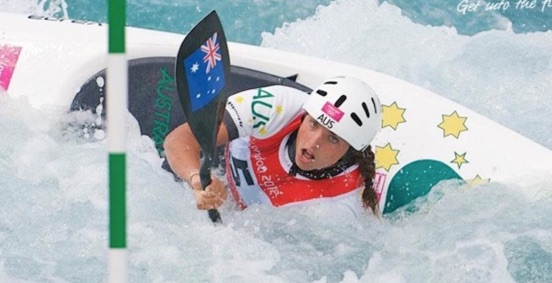
The whitewater slalom competition is underway at the Olympic Games in Paris.  Coming into the Games, there was probably no favorite more solid than the one pictured above, Jessica Fox of Australia.

Slalom success runs in Fox’s family: her father Richard, who competed in men's kayak for Great Britain, was heralded as perhaps the greatest the sport had ever seen while winning five world championships (1981, 1983, 1985, 1989, 1993).  Her mother Myriam was a world champion in 1989 and 1993 while competing in women's kayak for France.  Though slalom was absent from the Olympic programme for much of their careers, Richard and Myriam hung around long enough to become Olympians in the 1990s, Myriam winning a bronze medal in 1996.

When Jessica was four, the family moved to Australia so that Richard could take a coaching position with the national team there, and that's how Jessica came to compete for that nation.  Now Jessica is the one people are saying might be the greatest slalomist ever.  That doesn't mean she wins the gold every time out; the competition is strong enough, and the sport is fickle enough, for her to take her share of defeats.  But she does wind up on the podium with remarkable regularity.  She has medaled in kayak, canoe, or both at eight of the ten world championships held since 2010, and finished first eight times.  She has also amassed an eye-popping 75 medals in World Cup competition.

In the picture above, an 18-year-old Jessica is competing at her first Olympics at London in 2012 (I lifted it from her Instagram page).  The moment captured looks like a potential disaster, but she held her act together to claim the silver medal in women's kayak.  Four years later in Rio, she was the bronze medalist.  Women's canoe made its Olympic debut in Tokyo three years ago, and Jessica won the gold medal in that class while taking another bronze in women's kayak.

That brings us to this past weekend in Paris.  Jessica was the second-fastest athlete in the preliminary round Saturday.  Yesterday she started off low-key by finishing 8th in the semifinal round, five seconds (including a 2-second gate-touch penalty) off the pace.  But she came through when it counted, winning the final with a clean run to claim her first Olympic gold in kayak.  She still has the canoe class to come: that starts tomorrow.  And at age 30, she's quite likely to have at least one more Olympic Games in her future.  I don't take much stock in "greatest of all time" debates, but Jessica Fox's reign over this particular era cannot be denied at this point.


For more information on what this blog is about, click here.

Sunday, July 28, 2024

A little of everything for me, and action on the big stage for the Olympians

It's been mostly overcast this weekend with rain moving through the area.  The temperature has continued to be below normal, and I'm trying to savor that because it looks like hotter days will be moving in this coming week.

After a gym day on Friday, I was back in the boat yesterday.  It was pouring down rain when I arrived at the river, and it rained on me a good bit as I paddled.  As I paddled toward the mouth of the harbor there were a bunch of law enforcement and search and rescue craft on the water.  I was curious to know what was going on, but I stayed out of their way.

Out on the river there was a big barge rig coming upstream.  I paddled down to it and found the best wake surfing I'd seen in several weeks.  There was no one wave I was able to ride for long, but there were some linkable runs and I had a lot of fun working those.  I felt comfortable paddling aggressively, and once again I think having my most stable surfski down there has helped a lot.  Barge wakes aren't exactly the same as downwind conditions, but here I was working on skills that will transfer directly to a downwind situation.  It makes me want to go back to South Africa, although with the Grand Canyon trip coming up in 13 months I doubt I have it in me, energy-wise or money-wise, to squeeze in a big trip abroad like that.  Maybe in 2026...

Eventually the waves petered out as the barge rig moved farther upriver, and I paddled up the Tennessee bank back to the harbor.  I got a chance to talk to a couple of Tennessee Wildlife Resources Agency rangers, and they told me they had just recovered the body of a drowning victim.  Apparently sometime Friday the victim and a friend were in a fishing boat that capsized; emergency responders rescued the friend, but failed to find the drowning victim until yesterday morning around the time I was down there paddling.

I did a gym session this morning before heading to the river.  We'd gotten some more rain overnight and early this morning, but the sun was peeking through by the time I was headed downtown.  I paddled the surfski to the mouth of the harbor and found no barge traffic on the river, so I returned to the dock and paddled the whitewater boat.  That wrapped up a pretty good weekend: I enjoyed some surfing FUN yesterday, and logged some more forward stroke practice and some whitewater drills today.

Meanwhile, the Olympics have begun over in France, and medals have been won in one of the four whitewater slalom classes.  At 30 years old, Jessica Fox of Australia has solidified her status as one of the greatest of all time with her victory in the women's kayak class.  Klaudia Zwolinska of Poland earned the silver medal, Kimberley Woods of Great Britain the bronze.  The U.S. entrant, Evy Leibfarth of Bryson City, North Carolina, finished 15th in the semifinal round; only the top twelve finishers advanced to the final.  It was a disappointment for Evy, but her Olympics isn't over yet: she'll compete in the women's canoe class starting Tuesday.

The semifinal results are posted here; the final results are here.

The men's canoeists are next: their semifinal and final are scheduled for tomorrow.  The U.S. team's entrant, Casey Eichfeld of Drums, Pennsylvania, advanced to the semis with a 10th-place finish in yesterday's preliminary round.


For more information on what this blog is about, click here.

Friday, July 26, 2024

An ordinary guy does his thing here at home while the gifted are ready to go across the ocean

I did a gym session Tuesday morning.  I didn't get down to the river until the afternoon because of a morning obligation.  I paddled for 75 minutes and got showered with two periods of pretty good soft rain.  I thought it was beautiful out there.

We've continued to have cooler temperatures than normal, but the humidity has been at typical July levels this week.  I got good and sweaty during a 90-minute bike ride Wednesday, and yesterday I had sweat in my eyes while paddling the surfski out on the Mississippi yesterday.  I paddled the ski for 40 minutes at a fairly high intensity level, then came back to the dock and spent 20 minutes doing some drills in the whitewater boat.

Meanwhile, some paddlers of the world-class variety will be in their boats as the Olympic Games get underway in Paris.  The whitewater slalom competition will take place during the first week, and then the flatwater sprinters will take over for the second week.  I understand that the preliminary heats for women's kayak and men's canoe will take place tomorrow; the female kayakers will have their semis and finals on Sunday, and the male canoeists will have theirs on Monday.


For more information on what this blog is about, click here.

Monday, July 22, 2024

Monday photo feature

Sonny Salomon snapped this picture of me doing some surfing on the Caney Fork River in Rock Island State Park near McMinnville, Tennessee.  The year is 1998.

I no longer have the boat in this picture.  It was stolen eight years ago.  But last year I got my hands on one that's the same make and model, and that's the boat I've been messing around in on the riverfront in the last couple of weeks.  I've always liked the design: it's reasonably stable, surfs well, and is a decent general-purpose river-running boat.  I reckon it'll be the boat I use in the Grand Canyon next year, unless I stumble across something that I like even better.


For more information on what this blog is about, click here.

Sunday, July 21, 2024

I still have some higher rungs to reach for

I did a gym session Friday, and that wasn't the only weight-bearing exercise I got that morning.  I had a steel ladder that I wanted to mount on the side of my building, and I recruited a friend to help me.  It was a heavy item, especially whenever we had to hoist the thing up over our heads, and I feared that just two of us might not be enough for the job.  But we took it slow, and discussed the best course of action for each step, and in the end we got the ladder up on the wall and bolted in place:

The temperature continues to be below normal here, with Fahrenheit highs in the 80s.  Right now the forecast says it'll be that way for at least a week.  I don't understand it, but I'm sure not complaining.

I went down to the riverfront yesterday with the same plan I'd been following for a couple of weeks: paddle the surfski to the mouth of the harbor and see if there were any wake-surfing opportunities out on the Mississippi, and if there weren't, come back to the dock and paddle the whitewater boat.  I was in the first leg of this process when I encountered two guys on personal watercraft (jet skis).  As they taxied side by side out of the harbor toward the main river, they created a nice big wave that I settled onto and surfed for the better part of a minute.  Once we were beyond the no-wake zone, they opened up their throttles and left me behind.  I don't think they even saw what I was doing behind them.

There was no barge traffic on the river, so I returned to the dock and got in the whitewater boat.  Once again I did all kinds of drills: forward paddling drills, backpaddling drills, spins on sweeps and draws, Eskimo rolls.  My skills really aren't as rusty as I was afraid they might be, and that's put me in an upbeat mood.  It sure feels good to get wet, too, even on a cooler-than-normal July day.

This morning I did a gym session and went back down to paddle.  Sitting in the surfski at the harbor's mouth, I found things quiet out on the river once again.  So I headed back toward the dock.  I haven't mentioned it lately, but my mission to rotate from the hips more effectively goes on.  Occasionally the motion feels as natural for me as can be, and occasionally it feels totally forced; most of the time it's somewhere between those two extremes.

I capped off the morning with some more whitewater drills followed by a hose bath.  Even here in the Mid South, summer can feel pretty good sometimes.


For more information on what this blog is about, click here.

Thursday, July 18, 2024

Summer fun continues

Tuesday morning I did a gym session and then headed down to the river for some paddling.  When I reached the mouth of the harbor I saw the fuel barge that services touring riverboats coming the Mississippi, so I paddled out to inspect its wake.  I surfed a tiny bit but there wasn't really much action.  After that I went over to the Arkansas side and paddled upriver.  There's a series of wing dams over there, and with the river flowing at 16.4 feet on the Memphis gauge they were well underwater but creating lots of boily water, and I had some fun paddling through that.  Back when I was racing whitewater slalom I really struggled with keeping my boat gliding and making precise moves in boily water, and even today I make a point of working on that.  A 6.4-meter-long surfski with a rudder is a lot easier to keep gliding than a rudderless slalom boat that's no more than four meters long, but I still enjoy it when I can master this old slalom nemesis.

Tuesday was probably the most oppressively hot day we've had since I returned from my vacation, and as I paddled up the harbor back toward the dock I did some remount practice to cool off--twice from the left and twice from the right, because I like symmetry.

Yesterday morning there was some rain headed this way.  A look at the Internet radar showed a huge mass of rain over Arkansas, but it was moving eastward slowly enough that I thought I could get in a bike ride before it moved in.  The western sky looked pretty clear when I left the house, but by the time I was at my turnaround point at Shelby Farms there were dark clouds on the horizon.  I hoped for the best as I pedaled back toward home, but a few stray raindrops turned into a steady drizzle, and over the last couple of kilometers I got pretty good and soaked.  Fortunately I was in my last ten minutes of riding by this time.  And of course, "skin is waterproof," as we used to say at camp.

This morning I was back in the boat.  Commercial traffic has been scarce when I've been down there for the last couple of weeks, but when I reached the mouth of the harbor today there was a nice big barge rig moving upstream on that section of the river.  I paddled out and found waves that were less steep than normal, and they flattened out quickly the farther I got from the towboat's screws.  I did lots and lots of hard sprints and got only a handful of brief rides, but the effort was fun.  I've really enjoyed using a more stable ski than the one I've usually kept on the riverfront, as I'm seeing all kinds of little things I'm able to do that I couldn't before.

The nice thing about yesterday's rain is that it's cooled things off here.  Today's high temperature was in the mid 80s Fahrenheit.  I can't ask for better than that in the middle of July.

I haven't paddled the whitewater boat since Sunday.  I've been feeling a lot of soreness in my hips and lower back lately, and I think that was caused by all the Eskimo rolling and aggressive hip-snapping drills I did over the weekend.  So it's probably not a bad idea to give that area some extra time to recover.


For more information on what this blog is about, click here.

Monday, July 15, 2024

Monday photo feature

I didn't spend a whole lot of time in Minnesota last month, but I thought the landforms along the state's north shore of Lake Superior were interesting.  In particular, the many rivers and creeks running off the terrain into the lake caught my attention.  It had been raining a lot and all these streams had healthy flows.

This area of Minnesota seems to be most commonly known as the Sawtooth Mountains, a part of the Canadian Shield.  The streams that drain into Superior are generally short, but many of them have steep gradients with whitewater ranging as high as Class VI in difficulty.

Sadly, I really wasn't prepared to do much whitewater paddling.  I did have my whitewater boat on the truck, but I hadn't done any research or reached out to anybody in the local paddling community--very important tasks for somebody who wants to run lesser-known wilderness streams that are only runnable during rainy periods.  I also didn't have much time: by the time I reached Minnesota I was in the final days of the period I'd allotted for vacation.

The reality is that I've fallen out of the whitewater world--not completely out, but pretty close.  With one exception, I really don't know any regular whitewater paddlers anymore.  And it doesn't help that I live in a whitewater-poor part of the country.  Here in Memphis I'd rather paddle my surfski because it's a much more fun boat to paddle on the riverfront.  A decade or more ago I felt that I could just jump in the whitewater boat and paddle it any time I wanted, but in recent years I haven't felt so confident of that.  These days I'm convinced that I have to ease my body into anything the slightest bit different from what I normally do.  Is that true, or is it just in my head?  Hard to say.  It's an aspect of aging that I'm struggling with.

Whatever the case, my days of whitewater paddling aren't over yet, seeing as how I've got a trip through the Grand Canyon on the calendar about 13 months from now.  A chunk of next year will be dedicated to getting my body ready for all the stresses that will be imposed on it in that environment.


For more information on what this blog is about, click here.

Sunday, July 14, 2024

Enjoying some variety

I did a gym session Friday afternoon.  I'd worried that working my biceps and triceps would bring back the chronic soreness I dealt with last year and maybe a year or two before that, but so far those muscles have responded well.  I've long said that gym work is my least favorite part of training, and in the last decade or so I've kept it as brief and simple as possible for that reason.  But it does make me feel good when I keep at least a small gym routine going.  I believe it helps me as a paddler, and if nothing else, having some muscle tone satisfies my vanity.

By yesterday morning the heat and humidity were settling back into the Mid South.  It was 87 degrees Fahrenheit as I headed down to the river just after 9 o'clock yesterday morning, an I broke a sweat on the dock just getting my boat and gear ready.  I paddled the surfski to the mouth of the harbor to see if there were any barge-wake-surfing opportunities out on the Mississippi; when I saw that there weren't, I paddled back to the dock and hopped in the whitewater boat.  I did a bunch of stroke drills and also some Eskimo rolls, which felt really good on a hot sunny day.  In all, I spent a half-hour in each boat, and that was fun--it reminded me of the many days I spent as a kid at summer camp, playing around in different boats on the lake.  After paddling I took a hose bath on the dock, and came away feeling just as good as I would after visiting any spa.  Better, probably.

This morning I did another gym session and then headed back to the river.  It was clearly going to be another hot one, and paddling turned out to be the same story as yesterday's, too.  I paddled the surfski to the mouth of the harbor and saw no wakes to surf out on the river, so I returned to the dock to complete 30 minutes in the ski and then put in another half-hour in the whitewater boat.  I topped it off with another hose bath and came home feeling like I'd made some more good use of a hot Mid South summer day.


For more information on what this blog is about, click here.